
Plan your trip
Ha Giang or Sapa? An honest answer
I have never guided in Sapa, so I am not going to pretend I can compare the two properly — that is not my place to judge. What I can tell you honestly is what Ha Giang actually is, what Sapa is generally known for, and why travellers end up choosing one over the other.

Why I am not going to compare them properly
I grew up in Đồng Văn and I have guided in Ha Giang for years. I have not guided a single trip in Sapa, and I am not going to write three thousand words pretending otherwise. Most "Ha Giang vs Sapa" articles online are written by people who spent a few days in each on a backpacking trip — that is a fairer comparison than mine, not a worse one. What I can actually offer is a straight, first-hand account of Ha Giang, and the general, widely known facts about Sapa that do not require me to have been there to state honestly.
What Ha Giang actually is
Ha Giang is Vietnam's northernmost province, on the Chinese border. The loop through it — Dong Van (Đồng Văn), Meo Vac (Mèo Vạc), the Nho Que river (Nho Quế), the Ma Pi Leng pass (Mã Pì Lèng) — is ridden by motorbike over three to five days, either self-drive or on the back of a rider. It is karst mountain country: limestone peaks, terraced fields cut into steep slopes, and small Hmong, Dao and Tay villages along the road. Full detail is in the Ha Giang Loop guide.

What Sapa is known for
Sapa is a well-established hill town in Lao Cai province, also in the north, and it has been a tourist destination for far longer than the Ha Giang loop has existed as one. It is known for organised trekking through rice terraces and Hmong and Dao villages, a well-developed trail network, and easier logistics from Hanoi — including an overnight sleeper train, which Ha Giang does not have. It is also considerably more built up than Ha Giang, with a larger, more established tourist town at its centre.
The differences that are just true
- How you get there: Sapa has a sleeper train from Hanoi. Ha Giang does not — it is bus or car only, six to seven hours, covered in the Hanoi to Ha Giang guide.
- How you move once you're there: Sapa is built around trekking on foot. Ha Giang's loop is built around riding — self-drive or easy rider.
- How developed the main town is: Sapa's town centre is considerably larger and more set up for tourism. Ha Giang City and Dong Van are smaller and plainer.
- How long tourism has been established: Sapa's trekking tourism predates the Ha Giang loop's popularity by a wide margin.
Why travellers choose Ha Giang
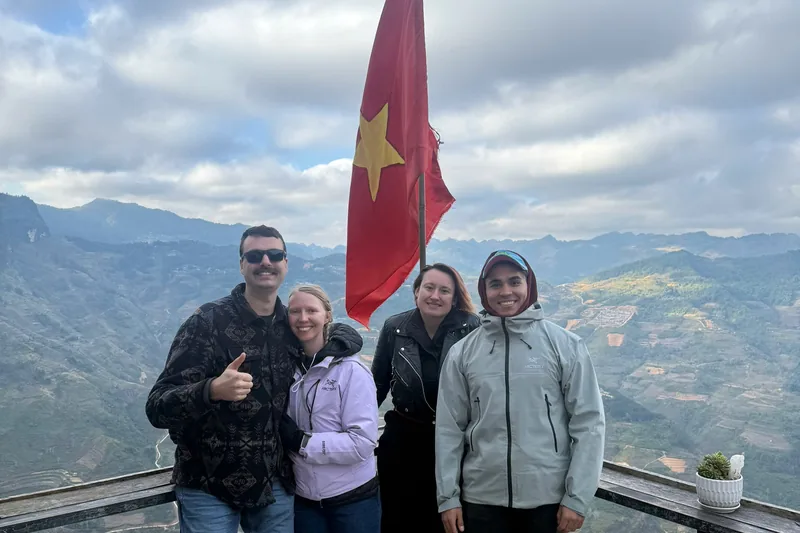
From what guests tell me on the road: they wanted somewhere that felt less arranged, roads with real distance between viewpoints rather than a short walk between them, and the specific experience of riding rather than walking through the landscape. Ha Giang is also, in practical terms, quieter — fewer buses, fewer group tours passing the same spot at the same hour.
Where this article is wrong for you
If you are choosing based on someone telling you Ha Giang is "better," stop and ask what they actually mean — better for what. I cannot tell you Ha Giang beats Sapa, because I do not know Sapa well enough to say so honestly, and neither does anyone who has spent four days in each.
Where Sapa might be the better choice
If you would rather walk than ride, want a shorter and more predictable trip, prefer well-established trekking infrastructure, or are travelling with people who are not comfortable on a motorbike even as a passenger, the general shape of Sapa — from everything publicly known about it — probably suits you better than Ha Giang does. I would rather say that plainly than have you book the wrong trip.
Next step
If Ha Giang sounds right for you
I can only speak honestly for Ha Giang — but if what you have read here sounds like your kind of trip, tell me your dates and I will tell you which of the four fits you.