
Plan your trip
The Ha Giang Loop, explained properly
The Ha Giang Loop is a multi-day motorbike route through Ha Giang province, in the far north of Vietnam on the Chinese border — Dong Van (Đồng Văn), Meo Vac (Mèo Vạc), the Nho Que river (Nho Quế), the Ma Pi Leng pass (Mã Pì Lèng). Most people ride it in three to five days, either self-drive or on the back of someone else's bike. Here is what it actually involves, without the marketing language.
What is the Ha Giang Loop?
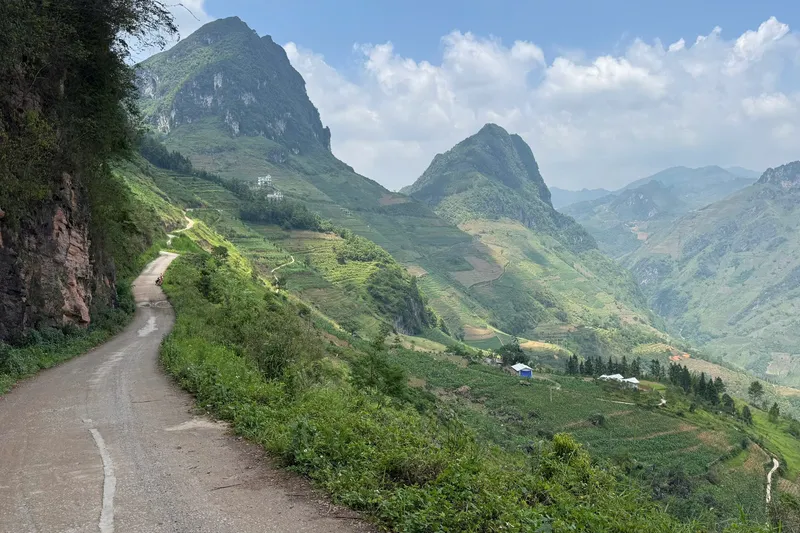
It is a private mountain road route through Ha Giang province, ridden over several days rather than done as a single drive. There is no single fixed route — homestays, weather and how much off-road riding you want change the shape of it — but the classic version runs roughly like this: out from Ha Giang City north to Lung Cu (Lũng Cú), the flag tower closest to the Chinese border, then into Dong Van (Đồng Văn), the old market town the loop is built around. From Dong Van the road climbs Ma Pi Leng (Mã Pì Lèng), one of the well-known mountain passes in northern Vietnam, running high above the Nho Que river (Nho Quế) before dropping toward Du Gia (Du Già). The return leg passes through Quan Ba (Quản Bạ) and Lung Tam (Lũng Tám) back into Ha Giang City.
That is the three-day shape. Longer versions add a full off-road and trekking day, push further into neighbouring Cao Bang province, or replace riding time with two full days on foot — more on that below. If you are still weighing this against a trip to Sapa, here is an honest answer on that too.
Is it safe?
It can be, and it can also go badly wrong, and the difference is mostly speed. The roads are narrow, the corners are blind, and the riders who get hurt on this loop are almost always the ones in a hurry — overtaking on a bend to keep to a schedule, riding a rented bike they have never handled before, or pushing on after dark. Weather is the other real risk: the rain that arrives with the summer brings landslides, and roads do occasionally disappear for a day or more.
None of that means don't come. It means ride slower than feels necessary, wear a proper full-face helmet rather than the thin open-face kind rental shops hand out by default, and be honest with yourself about whether you can actually ride a manual bike on wet mountain roads before you commit to self-driving. The full safety guide covers what actually causes accidents here in more detail, and travelling alone as a woman has its own answer.
How many days do you need?
Three days covers the classic route. Longer trips exist because there is more to see, not because the classic route is incomplete. These are my four:
| Trip | Length | From | Best for |
|---|---|---|---|
| The Classic Loop | 3 days, 2 nights | $190 | First time on the loop, limited days |
| Off The Map | 4 days, 3 nights | $245 | Wanting a full off-road day and a quieter waterfall |
| Ha Giang to Cao Bang | 5 days, 4 nights | $549 | Going further, one guest, one rider, all inclusive |
| Forest & Stone | 5 days, 4 nights | $345 | Trekking on foot rather than riding, camping on Ma Pi Leng |
All four are private — maximum five guests, and I never merge one group with another.
Self-drive or easy rider?
Both are genuinely fine choices; there is no wrong answer here. Take the rider — sit on the back, someone else handles the bike — if you have never ridden a manual motorbike. Ha Giang is not the place to learn, and the first day of some routes is dirt track. You can switch mid-trip if you change your mind partway through.
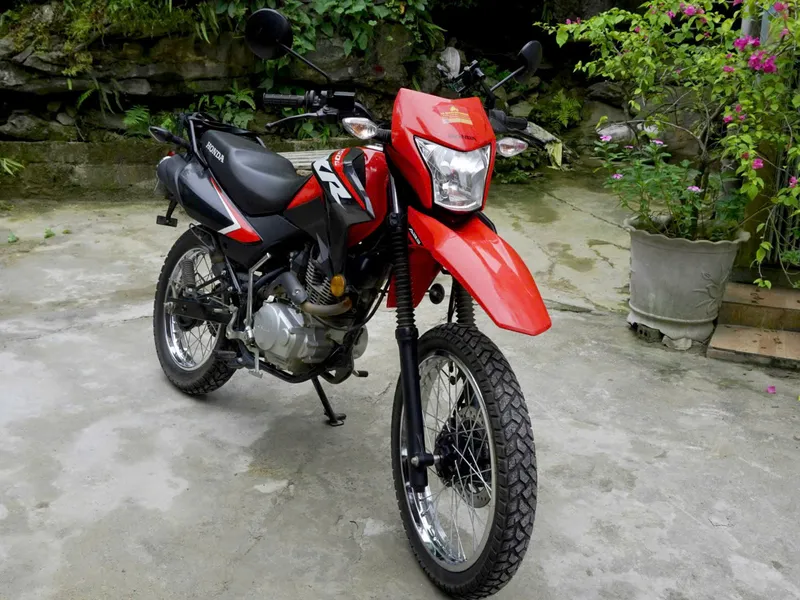
If you do self-drive, you legally need a 1968-convention International Driving Permit that covers motorbikes, plus your original national licence — not just as a formality. Without both, your travel insurance will not pay out if something happens, and police checks along the loop are common. Bike rental in Ha Giang City runs roughly from a Honda Wave 110cc at $7 a day up to a Honda XR 150cc at $21 a day; see the full rental price table for the models in between, or the full easy rider vs self-drive comparison if you are still deciding.
When's the best time to go?
September to November and March to May are the best months. The rain arrives with the summer and stays into the early autumn, and that is when the landslides happen — roads can disappear, sometimes for days. December to February is genuinely cold but the light and the empty roads make it worthwhile if you pack for it. I would rather tell you this before you book than after: send me your dates and I will tell you honestly what to expect. The full month-by-month breakdown has more detail on each season.
What does it cost?
My four trips run from $190 (self-drive, Classic Loop) to $549 (Ha Giang to Cao Bang, all inclusive). Doing it entirely on your own — renting your own bike and booking your own homestays — costs less up front. On top of the $7–21 a day bike rental, budget roughly 300,000 VND (~$12) a day for food, 100,000 VND (~$4) for petrol, and 500,000–1,000,000 VND (~$19–38) for a homestay or hotel room — call it $35–55 a day all in, per person, before the bike. See the full breakdown in what the loop actually costs.
Do you need a guide, or can you do it yourself?
You do not need me. People rent a bike in Ha Giang City and ride this loop on their own every week, and plenty of them have a very good trip.
What a guide actually buys you is not the road itself — it is someone who already knows which homestay is good tonight, who can read the sky and change the plan before the rain does it for you, and who is not learning the mountain at the same time you are. What you give up is pace and privacy: you follow someone else's judgement on when to stop, and you are travelling with strangers unless you book the whole group yourself.
If you are a confident rider, comfortable reading a map and making your own call on when to turn back, you do not need to pay anyone to do this. If any of that makes you uneasy, that unease is worth listening to.
What to pack
On one of my trips: a small day pack and nothing else. Big bags stay in a locker in Ha Giang City and are waiting for you when you get back.
Self-driving independently, the general rules of packing for a multi-day motorbike trip in a mountain climate apply: a waterproof outer layer regardless of season, layers you can add or remove rather than one heavy coat, a buff or scarf for road dust, gloves, and cash in small notes — card machines are rare outside Ha Giang City.
Where this trip is wrong for you
If you want to cover serious distance fast, dislike being cold and wet, or have never ridden a manual motorbike and won't consider taking the back seat instead, this is not the trip for you. Come for the mountains, not for the mileage.
Common mistakes first-timers make
Trying to compress the classic route into two days is the one I see most often from the itinerary alone — my shortest trip is three days for a reason; two makes every stop a photo taken from a moving bike.
Quick questions
A few short answers before you go — the full FAQ page has more.
- How do I get to Ha Giang from Hanoi? Sleeper bus, around six to seven hours, usually overnight. You arrive early morning and start after breakfast — see the full bus guide for real operators and prices.
- Do I need a motorbike licence? Not as a passenger. To ride your own bike you need the International Driving Permit mentioned above, plus your original licence.
- How big are the groups on a guided trip? Maximum five guests, minimum two to depart, and I never merge one group with another.
Next step
See the four trips, or ask me your dates
I am not going to tell you this is the best loop in Vietnam. I do not know that, and neither does anyone who says it. Tell me when you are coming and I will tell you honestly whether it is a good time, and which of the four fits you.